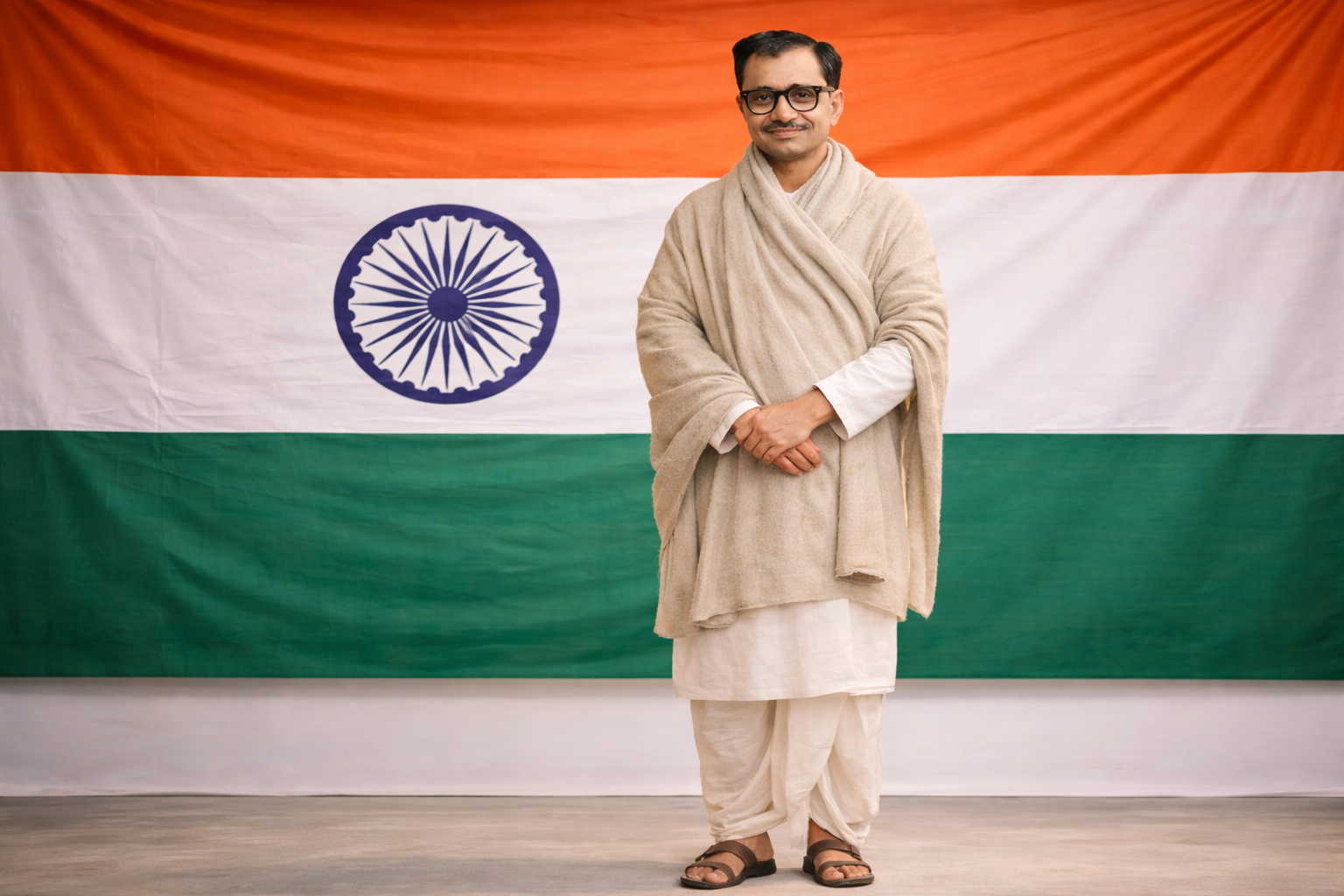
The fundamental characteristic
of Bhartiya Culture is that it looks
upon life as an integrated whole
Welcome to the Legacy of Pandit Deendayal Upadhyaya
Pandit Deendayal Upadhyaya (1916–1968) was an eminent thinker, philosopher, economist, journalist, and the visionary leader who laid the ideological foundation of modern Indian nationalism. As the guiding force behind the Bharatiya Jana Sangh and the architect of Integral Humanism, his thoughts continue to inspire India’s social, political, and economic frameworks.
Vision
A nation rooted in its cultural identity, committed to uplifting the poorest, and focused on holistic human development guided by dharma, dignity, and self-reliance.
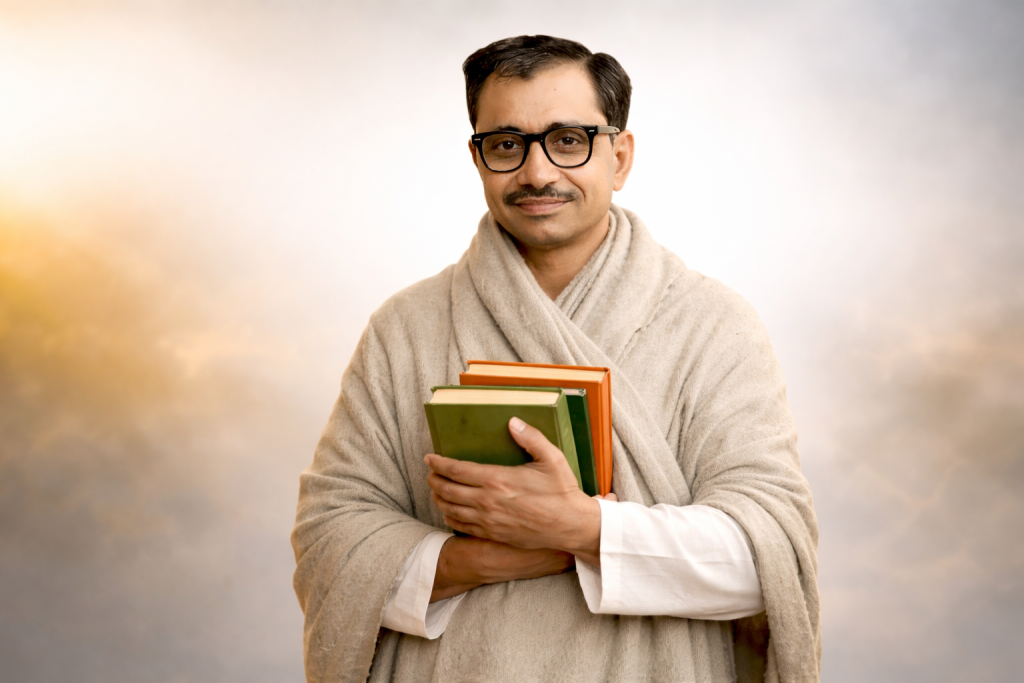
Pandit Deendayal Upadhyaya
Pandit Deendayal Upadhyaya envisioned a nation where development was rooted in cultural identity and guided by moral values rather than blind imitation of Western models. He believed that India’s strength lies in its spiritual heritage, social harmony, and community-centered approach to progress. His concept of Integral Humanism (Ekatma Manav Darshan) emphasized the balanced development of body, mind, intellect, and soul, placing the human being—not the state or the economy—at the center of national growth.
He dreamt of a self-reliant India where every individual enjoyed dignity, equality, and opportunity through inclusive development inspired by ethics and compassion. According to him, true progress required uplifting the last person in society through Antyodaya, bridging disparities between villages and cities, integrating science with spirituality, and building an economy driven by service rather than exploitation. His vision continues shaping India’s socio-political direction, empowering leaders, reforms, and policies dedicated to national welfare.
Key Focus
- Integral Humanism | Ekatma Manav Darshan
- Nation-building through culture & character
- Social harmony and upliftment of the last person (Antyodaya)