
Philosophy
– Integral Humanism
Integral Humanism (Ekatma Manav Darshan)
Pandit Deendayal Upadhyaya’s philosophy of Integral Humanism presents a holistic model of national development rooted in India’s cultural values and human dignity. He believed that true progress must place the human being at the center—not merely economic expansion or technological growth. His vision emphasized harmony between individual rights and social responsibilities, encouraging a society where each person can grow while contributing to collective well-being.
Human-centric
Development
A development model focused on human welfare first, ensuring dignity, equality, and opportunities for every individual.
Harmony between
Individual & Society
Promotes balanced progress where personal growth aligns with social responsibilities and collective well-being.
Material & Spiritual
Progress
Advocates for growth that enriches both external prosperity and inner moral values, not materialism alone.
Cultural
Nationalism
Emphasizes national identity rooted in cultural heritage, unity, and civilizational values rather than territorial or political boundaries.
Economy & Village-based
Development
Supports self-reliant villages, grassroots empowerment, and local economic systems instead of centralised industrial control.
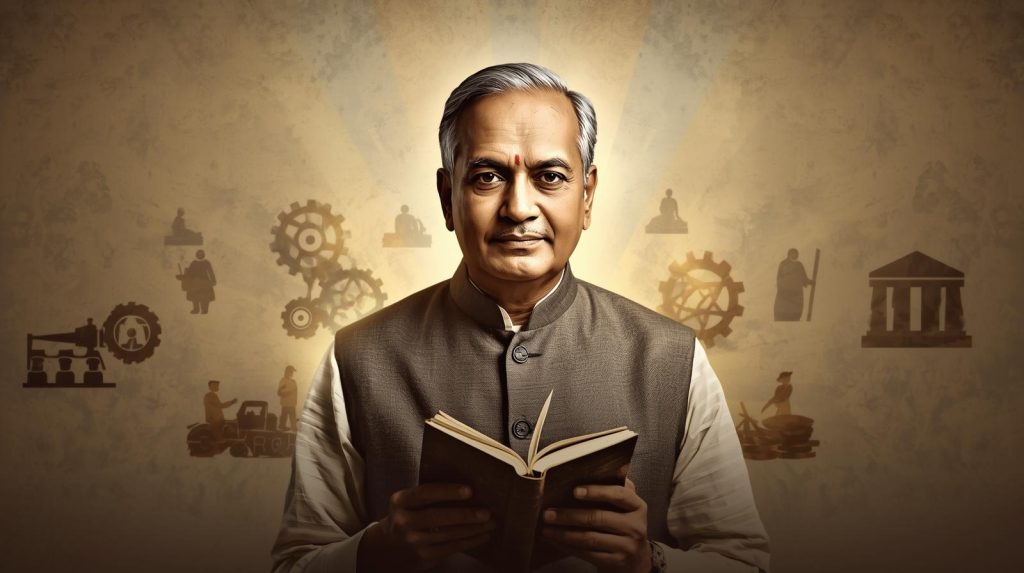
Antyodaya: Serving the last and the weakest citizen
Antyodaya represents the heart of Pandit Deendayal Upadhyaya’s vision—ensuring that national progress begins with the upliftment of the most neglected individuals. It emphasizes that true development is measured not by the prosperity of the few, but by how well the weakest and poorest are supported. Antyodaya focuses on inclusive growth, social justice, and equal opportunity so every citizen can live with dignity.
Key Points:
- Prioritizing welfare schemes for the most vulnerable and marginalized.
- Ensuring equal access to education, health, and social security.
- Empowering communities through skill development and employment opportunities.
- Building an inclusive nation where no one is left behind.
Swadeshi: Economic self-reliance
Swadeshi promotes economic independence by encouraging indigenous industries, resources, and entrepreneurship. Pandit Deendayal Upadhyaya believed that a strong nation must rely on its own capabilities and invest in local talent, innovation, and production. Swadeshi aims to strengthen rural and urban economies alike, creating sustainable livelihoods and national resilience.
Key Points:
- Encouraging domestic manufacturing and entrepreneurship.
- Reducing dependence on foreign imports and strengthening national production.
- Supporting small businesses, artisans, and rural industries.
- Developing economic policies rooted in national needs and capabilities.
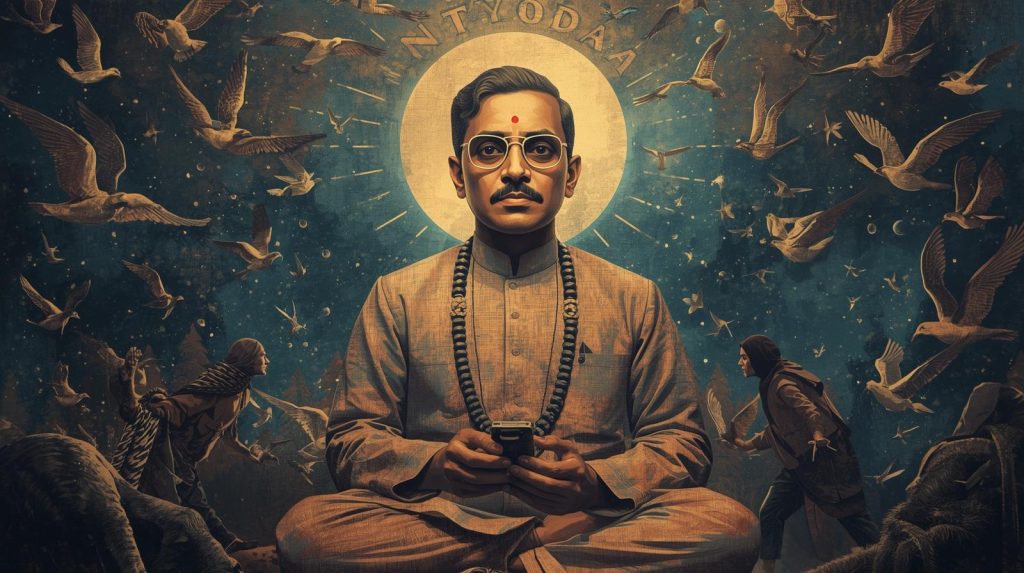

Dharma: Ethical foundation for societal balance
Dharma, as envisioned by Upadhyaya, is not limited to religion but refers to moral duty, justice, and universal ethics that maintain balance in society. When personal behavior and governance are guided by dharma, harmony prevails and conflicts are minimized. It promotes fairness, responsibility, and collective well-being, creating a society built on trust and moral principles.
Key Points:
- Guiding public life with principles of honesty, duty, and fairness.
- Maintaining harmony between individual rights and societal responsibilities.
- Creating a moral framework for governance and leadership.
- Building a society rooted in peace, unity, and mutual respect.
Relevance Today
Pandit Deendayal Upadhyaya’s philosophy remains deeply relevant in shaping India’s modern development path. His ideas continue to guide governance models, welfare frameworks, and socio-economic planning rooted in cultural identity and ethical values. From Antyodaya-based welfare schemes to decentralized growth and national self-reliance, his ideology drives policies that balance progress with compassion.
