
Biography
Early Life
Pandit Deendayal Upadhyaya was born on 25th September 1916 in Mathura district, Uttar Pradesh. Despite losing his parents at a young age, his determination and excellence in academics shaped a strong foundation for public life.
Pandit Deendayal Upadhyaya
Raised by his maternal relatives, Deendayal experienced a childhood marked by financial struggle but also nurturing discipline and values. Despite hardships, he displayed extraordinary dedication to learning, known for his calm nature, sincerity, and intellectual brilliance. His early years instilled in him a profound sense of empathy for the underprivileged and inspired a lifelong belief in serving society with humility, simplicity, and moral integrity. These formative experiences shaped the foundation of his future ideological path and commitment to national upliftment.

He dreamt of a self-reliant India where every individual enjoyed dignity, equality, and opportunity through inclusive development inspired by ethics and compassion. According to him, true progress required uplifting the last person in society through Antyodaya, bridging disparities between villages and cities, integrating science with spirituality, and building an economy driven by service rather than exploitation. His vision continues shaping India’s socio-political direction, empowering leaders, reforms, and policies dedicated to national welfare.
Education
Pandit Deendayal Upadhyaya was an exceptional student throughout his academic journey, recognized for his discipline, sharp intellect, and deep interest in literature, philosophy, and national service. Despite facing personal hardships, he consistently excelled in his studies and earned multiple scholarships. His educational experiences played a significant role in shaping his ideological vision and commitment to social upliftment.
- Schooling — Kota, Rajasthan
- High School —Sikar, Rajasthan
- Intermediate —Birla College, Pilani
- Bachelor’s Degree —Sanatan Dharma College, Kanpur
- Master’s Studies—St. John’s College, Agra
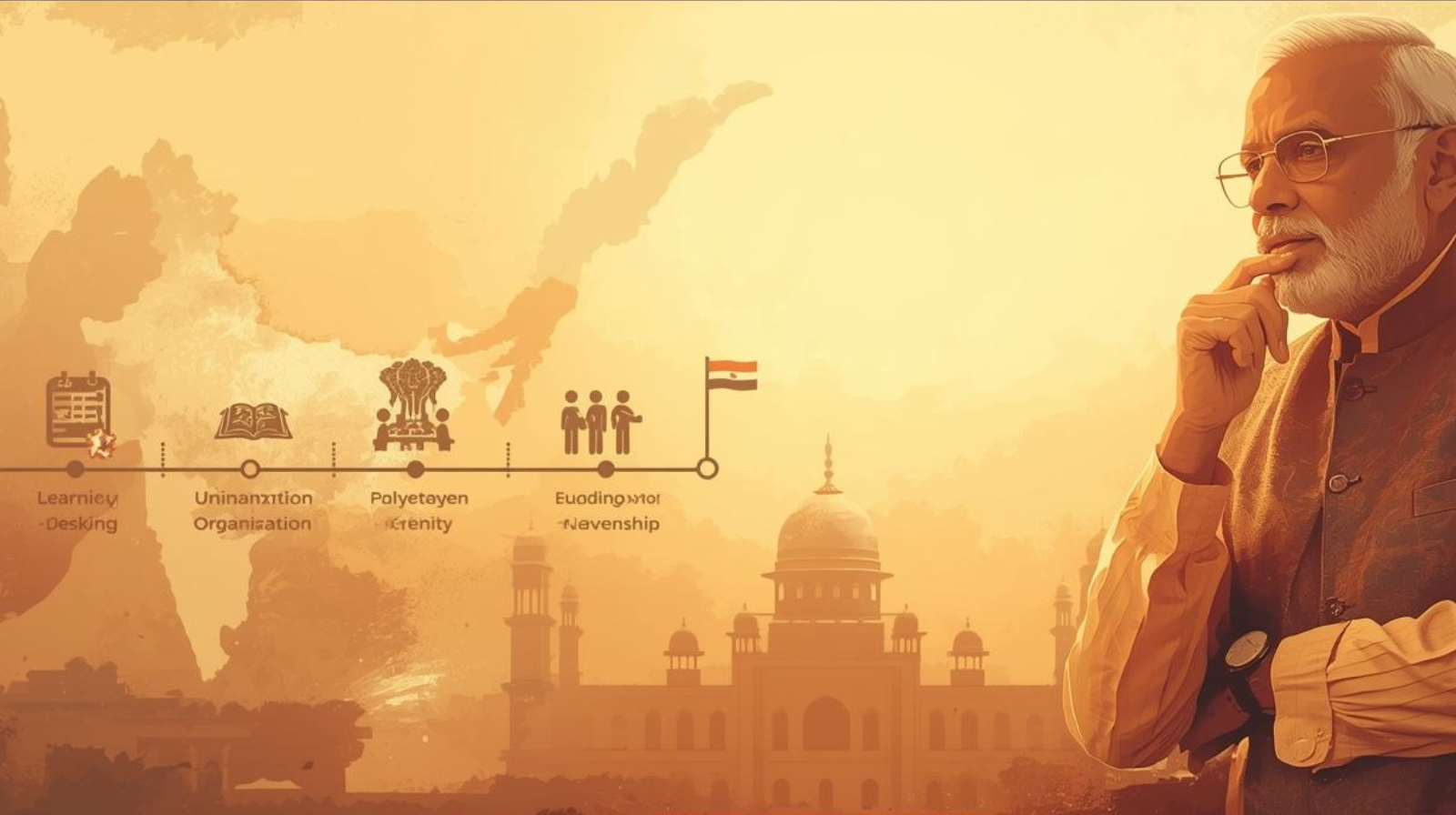
Political Journey
Joined Rashtriya Swayamsevak Sangh (RSS) in 1937
Deendayal Upadhyaya joined the RSS in 1937 during his student years, drawn by its vision of national unity and cultural revival. His dedication, discipline, and leadership quickly gained respect among volunteers and senior members.
Became an influential organiser, writer, and thinker within the movement
He emerged as a key organiser and intellectual force within the RSS, shaping ideological training and administrative structure. Through speeches, literature, and journalism, he inspired thousands and strengthened grassroots mobilisation across India.
Co-founded the Bharatiya Jana Sangh (1951) with Syama Prasad Mookerjee
In 1951, he co-founded the Bharatiya Jana Sangh with Syama Prasad Mookerjee, establishing a political platform rooted in cultural nationalism, democratic values, and socio-economic self-reliance, laying the foundation for a strong national political alternative.
Became National President of Jana Sangh in 1967
In 1967, he became the National President of the Bharatiya Jana Sangh, guiding the party with humility and ideological clarity, expanding its national presence and shaping policies based on Integral Humanism and inclusive development.
Final Years
His mysterious and tragic death on 11 February 1968 shocked the nation and remains a subject of inquiry.
Pandit Deendayal Upadhyaya (1916–1968) was an eminent thinker, philosopher, economist, journalist, and the visionary leader who laid the ideological foundation of modern Indian nationalism. As the guiding force behind the Bharatiya Jana Sangh and the architect of Integral Humanism, his thoughts continue to inspire India’s social, political, and economic frameworks.
Legacy
Pandit Deendayal Upadhyaya’s philosophical framework of Integral Humanism remains one of his most enduring contributions to Indian political thought. His ideas emphasized balanced development rooted in cultural values, economic self-reliance, and social harmony. His work laid the ideological foundation for the Bharatiya Jana Sangh and later shaped the intellectual direction of the Bharatiya Janata Party (BJP).
